An office is part of a company's identity and the environment in which it operates. It is where meetings, client encounters, and moments that are part of the company's daily life take place. Therefore, the choice of this space requires attention to aspects such as location, architecture, natural light, proportions, layout, and the quality of the property.
Barcelona offers particularly attractive conditions for finding spaces with character. The architecture of the Eixample, historic buildings, wide avenues, and some of the city's most representative addresses provide a unique setting for companies seeking a location that aligns with their image and the way they work.
In this context, finding offices and commercial premises in Barcelona means discovering very different spaces, where layout, construction quality, light, and the personality of the building can make a significant difference in a company's daily experience.
An office also speaks of a company
The first impression of a company does not always begin when a meeting starts. It can start much earlier, with the address that appears on a business card, in a commercial proposal, in an email signature, or upon a client's arrival at the building.
The office can convey elegance, professionalism, discretion, or personality. There is no one-size-fits-all formula: a firm that receives international clients may seek a representative location, while another may prioritize privacy, tranquility, flexibility, or a unique space.
The key is that the property is consistent with the company that occupies it and with the actual use that will be made of it. The number of people, the type of meetings, the need for private or collaborative areas, and the forecast for growth are issues that should be considered from the outset.
Does the office truly represent the company behind it?
That is one of the first questions worth asking before starting a search.
The importance of a good location
In the corporate real estate market, location remains one of the fundamental factors. But a good address does not only mean being in the center.
The surroundings, accessibility, nearby services, and especially in the high-end segment, the character of the location itself also matter. Proximity to clients, suppliers, hotels, restaurants, or specific business hubs can weigh differently depending on each company's activity.
Barcelona has some particularly representative addresses. Passeig de Gràcia is one of the best examples: an avenue renowned for its modernist architecture, unique buildings, and commercial activity, as well as concentrating a significant part of the corporate and commercial image of the city.
The city also offers a wide public transport network, a relevant aspect to facilitate access for employees, clients, and collaborators. Proximity to metro, bus, train, or intermodal stations can directly influence daily comfort and the ability to attract talent.
However, an exceptional location should not be chosen solely for its name. It must fit with the activity, image, and needs of the company, as well as with the usual commutes of the people who will use the space.
When architecture is part of the value
Barcelona has a particularity that sets it apart from other markets: the presence of an extraordinary architectural heritage.
Especially in the Eixample and around Passeig de Gràcia, we find modernist buildings and historic estates that offer a personality difficult to reproduce in conventional constructions.
Architecture can thus become an essential part of an office: high ceilings, large windows, original elements, unique facades, interior courtyards, or renovations that combine historical character with current amenities.
A good part of this modernist heritage of Barcelona is part of the everyday landscape of the Eixample and helps to understand why certain buildings provide added value that goes beyond the available surface area.
For a company, settling in a property of these characteristics can mean much more than having a workspace. It can mean developing its activity in a building with its own identity linked to the city's history.
Beyond square meters
Two offices with the same surface area can offer completely different experiences.
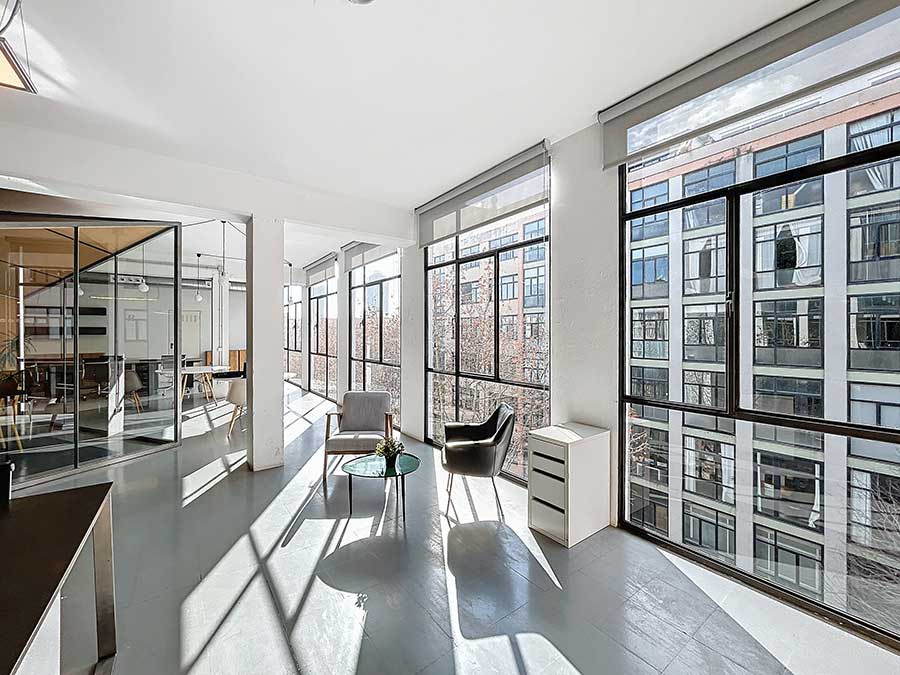
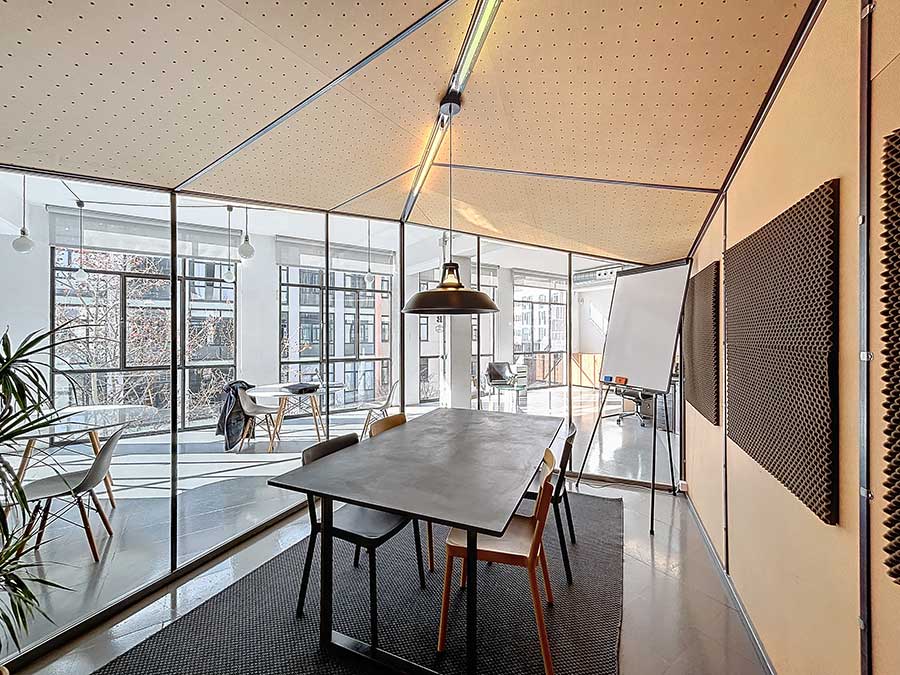
Natural light, ceiling height, orientation, views, acoustics, layout, and the quality of finishes can completely transform a space. It also matters how the work areas, offices, meeting rooms, and common spaces relate to each other.
In a high-level office, it is also worth paying attention to details such as:
- The quality of access and common areas.
- The privacy of the offices.
- The meeting rooms and their actual capacity.
- The natural and artificial lighting.
- The climate control and acoustic insulation.
- The connectivity and technical facilities.
- The energy efficiency and comfort of the space.
- The possibilities of adapting the layout to the corporate identity and future changes of the company.
It is not about accumulating features, but about ensuring that all of them form a balanced whole. An office can be representative without being excessive: often, quality is found precisely in proportion, materials, functionality, and discretion.
To rent or buy an office in Barcelona?
The decision between renting and buying will depend on each company's strategy, the expected time horizon, and the investment it wants to allocate to the space.
Renting an office in Barcelona
Renting can offer flexibility and allow a company to settle in a representative location without assuming the acquisition of the property. The offer of offices for rent in Barcelona allows for comparing very different typologies, locations, and configurations before making a decision.
However, especially when looking for a high-level space, one should not only compare the price per square meter. The quality of the building, location, layout, condition of the property, common areas, and adaptation possibilities are part of the real value of the property.
It is also advisable to consider the expected duration of occupancy, the terms of the contract, and the cost of necessary adaptations. A space that initially seems more attractive may cease to be so if it requires significant intervention that does not align with the company's expected duration of stay.
Buying an office in Barcelona
Buying also introduces a patrimonial dimension. For a company that is clear about where it wants to develop its activity in the long term, acquiring its own space can be part of a real estate strategy and offer greater control over renovations and the configuration of the property.
When analyzing offices for sale in Barcelona, in addition to current needs, it is advisable to consider the location, uniqueness of the property, construction quality, condition of the building, and its future possibilities.
In this case, it is also important to consider the costs associated with acquisition, adaptation, and maintenance, and not to limit the comparison to the initial price. The decision should respond to the specific needs and financial approach of each company.
An office worthy of a company
Choosing an office is choosing the space in which a company will work, receive, grow, and represent its identity.
Barcelona offers historic buildings, unique architecture, representative locations, and spaces capable of meeting the needs of companies looking for more than a conventional office.
The key is to find the balance between location, architecture, quality, functionality, and identity. This is complemented by practical issues such as accessibility, adaptability, and the overall cost of the space during the time it is expected to be used.
A special office does not have to be the largest or the most striking. It is one that ensures that the space, activity, and company function coherently.
Are you looking for an office in Barcelona?
If you are looking for an office for your company, whether for rent or for sale, the Atipika team can help you find a property that meets your needs for location, representativeness, functionality, and quality.
You can consult our selection of offices and commercial premises or contact the Atipika team to discuss your project and define what type of space best fits your company.
 Castellano
 Català
 English
 Francais
 Italiano
 русский