Mediterranean architecture in Catalonia and the Balearic Islands cannot be understood without the presence of nature. Beyond the sea views and sunny terraces, many of the most exclusive properties hide authentic secret gardens and green spaces that, in addition to providing beauty, convey intimacy, tradition, and a unique cultural value.
These corners, often invisible from the outside, turn each home into a particular universe where history, design, and Mediterranean lifestyle coexist.
A cultural legacy between stone walls
In the Maresme and the Costa Brava, many historic country houses have preserved their romantic gardens and interiors intact. Examples such as the Santa Clotilde Gardens in Lloret de Mar, designed by Nicolau Maria Rubió i Tudurí in the early 20th century, illustrate how the Mediterranean tradition has integrated terraced, sculptures, and viewpoints facing the sea. Although it is a public garden, its design inspires numerous private properties in the area, where Atipika offers country houses and villas with landscaped grounds of similar characteristics: centennial olive trees, bougainvillea pergolas, and ornamental fountains that evoke classical elegance.
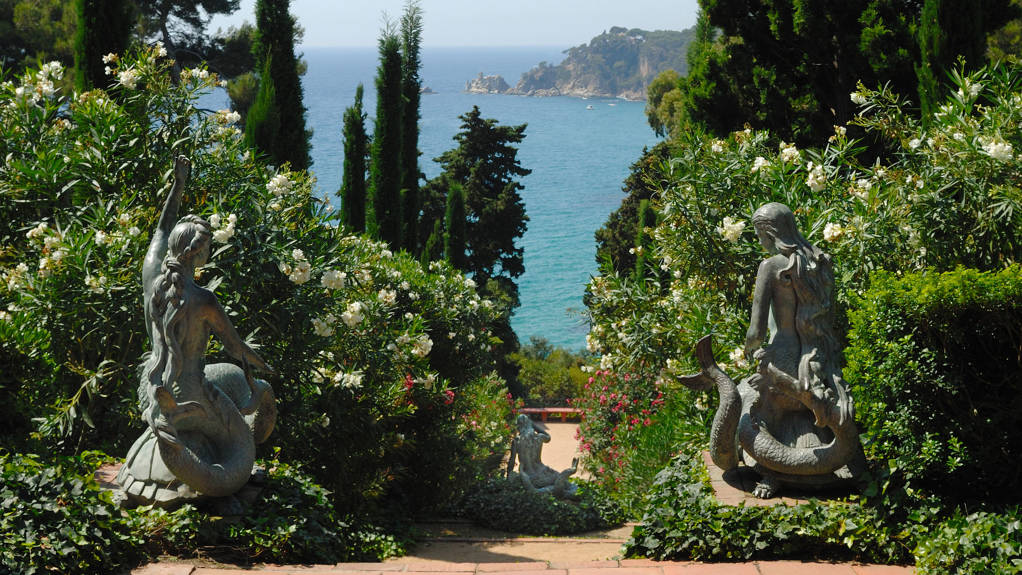
Image of the Santa Clotilde Gardens in Lloret. Image by Patrimoni Lloret
In the central Costa Brava, towns like Begur and Palafrugell preserve Indian houses with colonial-style gardens, a result of the return of families who emigrated from America in the 19th century. These spaces, with palm trees, magnolias, and ponds, remain a symbol of exclusivity and cultural tradition.
In Menorca and Mallorca, the Arab and Mediterranean influence is reflected in estates with interior courtyards and cisterns that once collected rainwater. Gardens like those at Alfabia in Mallorca, with its mix of Islamic, Renaissance, and Baroque architecture, show how water features, pergolas, and native vegetation —cypresses, orange, and lemon trees— have been essential elements of Balearic life. Today, numerous private properties maintain that essence, reinterpreted in a contemporary key, to offer international buyers an intimate, functional, and culturally rooted space.
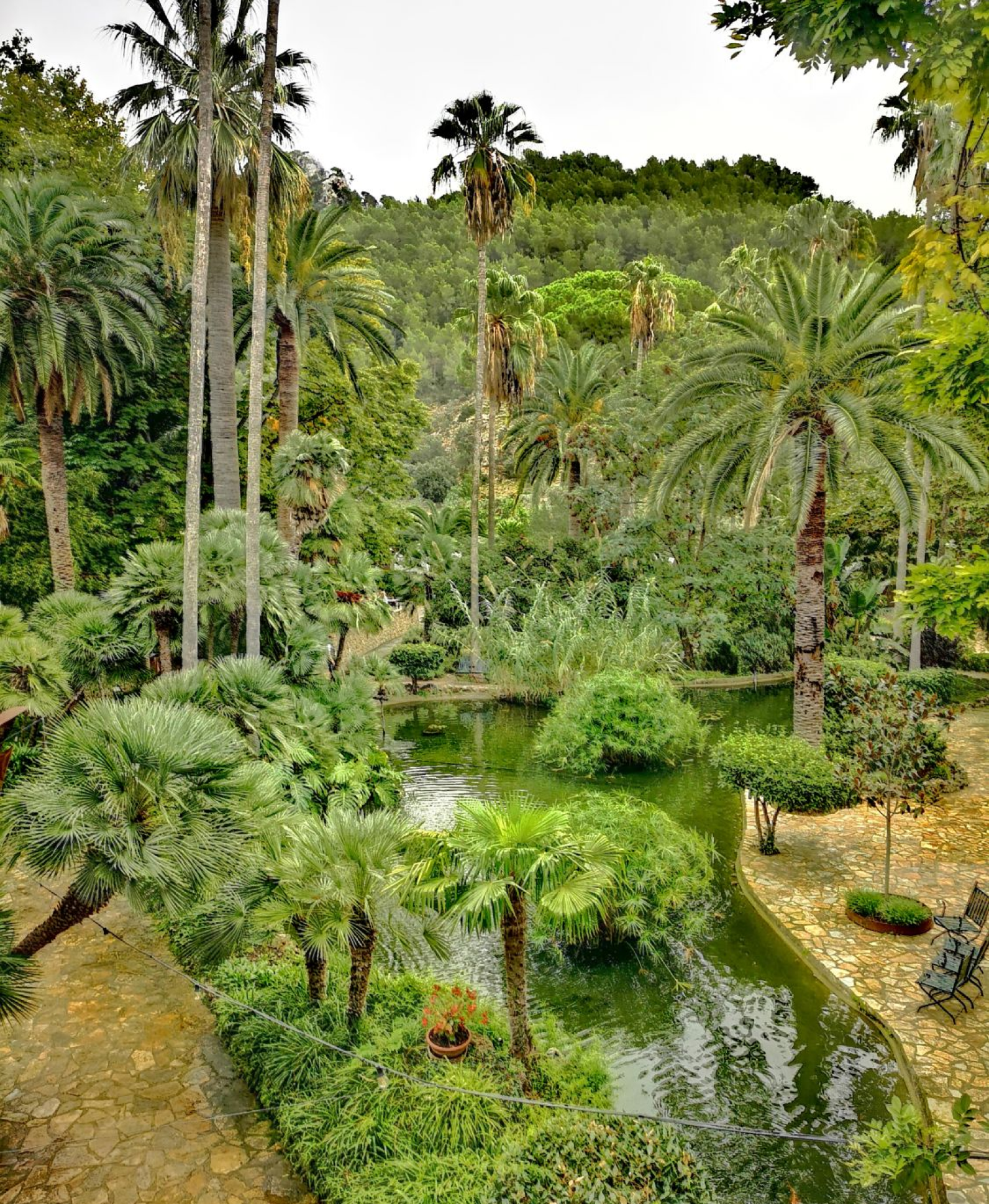
Image of the Alfabia Gardens in Mallorca. Image owned by jardinesdealfabia.com
In Barcelona, there are examples of private gardens integrated into modernist homes in the Zona Alta and Eixample, inspired by references such as the Jardins de la Tamarita or the Palau Robert, where trimmed hedges, magnolias, and fountains are combined with sculptures. Currently, many exclusive properties by Atipika in these areas maintain private landscaped courtyards that continue this tradition, becoming an added value for those seeking a green oasis in the heart of the city.
Thus, in both Catalonia and the Balearic Islands, gardens are not just an aesthetic complement: they are a cultural and heritage legacy that enhances the value of each property, while offering its owners an intimate and historically rich environment.
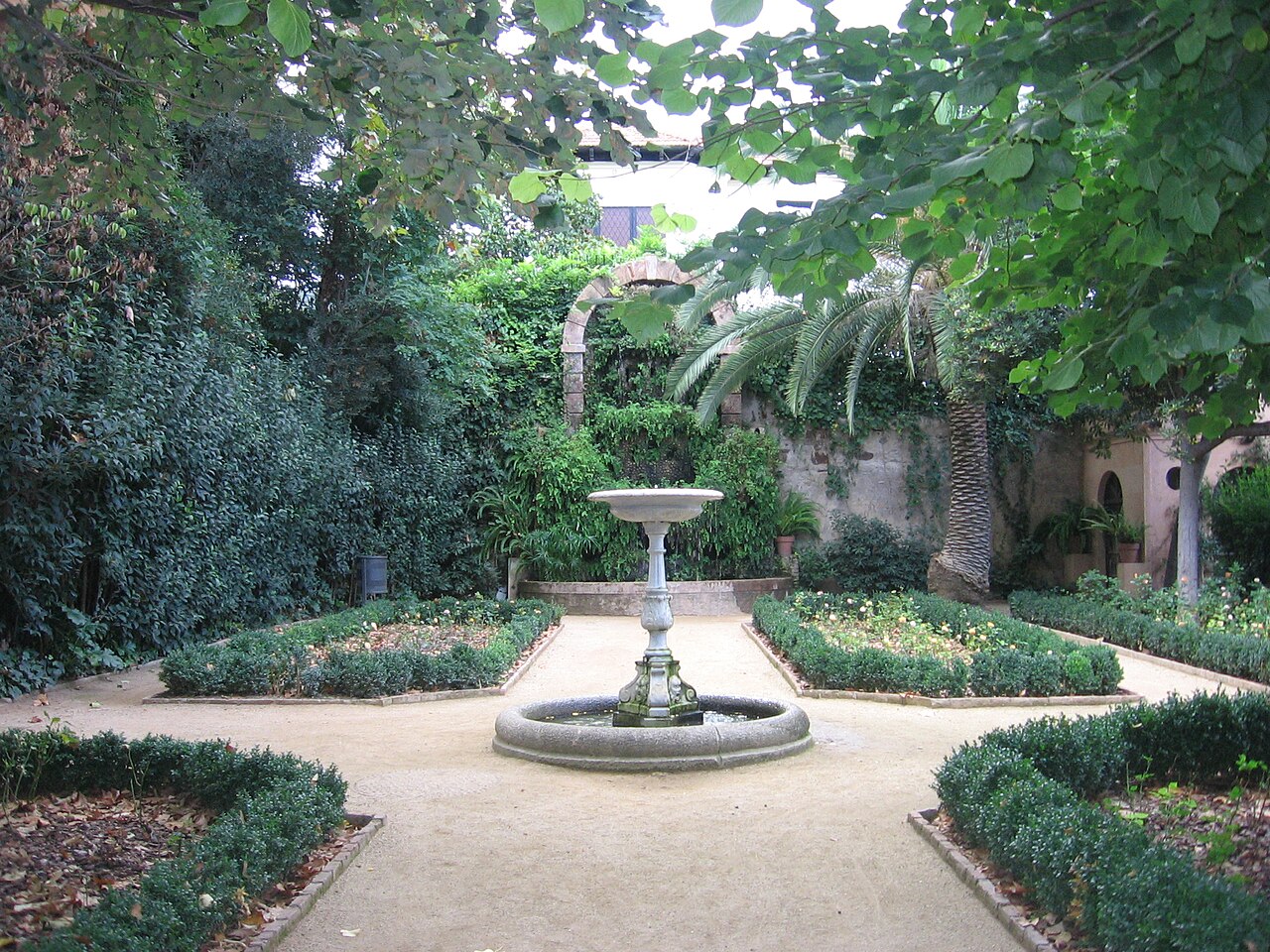
Image by Canaan - Own work, CC BY-SA 3.0,
The added value of greenery in contemporary housing
International buyers increasingly value outdoor spaces as a determining factor in choosing a property. According to a study by Fotocasa Research (2024), having a garden or terrace can increase the selling price of a home by up to 25% in high-end coastal areas, and in metropolitan areas like Barcelona, the demand for homes with green spaces has grown by 40% in the last decade.
In Gavà Mar, Castelldefels, or Sitges, where Atipika offers exclusive villas, there are numerous projects with gardens designed by renowned landscapers that integrate native species such as olive trees, pines, cypresses, or lavender. These gardens, besides providing beauty, require less water consumption, aligning with the increasing sensitivity towards sustainability. Many of these properties also include pools surrounded by Mediterranean vegetation and chill-out areas that enhance the seaside lifestyle.
In Barcelona, homes in the Zona Alta or Eixample feature private landscaped courtyards that, although smaller in size, have become true urban retreats. Inspired by examples like the Jardins de Rubió i Lluch or the inner block of Passatge Permanyer, these spaces allow for enjoying tranquility in the heart of the city, something increasingly sought after by international buyers.
In the Balearic Islands, the Mediterranean garden takes on an even more exclusive dimension. In Mallorca, properties overlooking the Serra de Tramuntana integrate landscaped terraces and ecological orchards that offer a direct connection to the land. In Menorca, declared a UNESCO Biosphere Reserve, many private estates are designed with sustainable landscape criteria, incorporating native species such as wild olive trees, fig trees, or holm oaks, in perfect harmony with the protected natural environment.
Having a private garden in a privileged environment is not only a comfort element but a genuine investment in heritage value: it increases the exclusivity of the property, enhances its appeal for future revaluation, and aligns with the global trend towards a healthier, more sustainable lifestyle connected with the natural environment.
Future perspective
In a market where exclusivity is increasingly measured by the experience offered by the property, secret gardens and green spaces in Catalonia and the Balearic Islands are consolidating as a differential value. Beyond architecture, it is these intimate and cultural corners that turn a property into a unique asset, capable of offering well-being, privacy, and an authentic connection with the Mediterranean environment.
Atipika, with its presence in Barcelona, Castelldefels, Gavà Mar, Sitges, Maresme, Costa Brava, and the Balearic Islands, offers international investors properties that integrate these high-value green spaces, inviting them to discover a lifestyle where luxury merges with nature and Mediterranean culture.
 Castellano
 Català
 English
 Francais
 Italiano
 русский