There is something inevitably emotional about viewing a home for the first time. Buyers arrive with expectations, discover new spaces and, within a few minutes, begin imagining where furniture might go, how gatherings could be organised or what a different way of living might look like.
That first impression matters. A property should also create an emotional response.
However, the most considered decisions usually begin during the second viewing.
Once the effect of novelty has faded, more precise questions emerge. The space is heard differently, the layout becomes easier to understand and details that may have been concealed behind a terrace, striking views or an impeccable renovation begin to appear.
The first viewing allows buyers to discover a property. The second helps them understand it.
Atipika's selection of properties for sale includes homes with very different characteristics. Before making a decision, it is worth considering not only what creates a positive first impression, but also how the property will function in everyday life.
Photographs show the space, but they do not show the passage of time
Property photography can convey architecture, proportions, design and brightness. However, it cannot explain how a home changes throughout the day.
A terrace may appear bright in the morning and remain in shadow during the hours when it would be used most. A living room may receive spectacular light at sunset but feel considerably darker for much of the day.
An apparently peaceful zone may also experience significant changes during certain periods. Traffic, commercial activity, school access or seasonal visitor numbers can alter the perception of the surroundings.
For this reason, when a property generates genuine interest, it is advisable to view it again at a different time.
The objective is not to search for faults, but to complete the available information and confirm whether the home retains its qualities beyond the particular moment chosen to present it.
A property should be observed as a space in motion, rather than as a still image.
The viewing begins before crossing the front door
The journey to the property also forms part of the experience of living there.
What is the access from the street like? Is it easy to enter and leave the car park? Are there changes in level, stairs or impractical routes? Does the arrival provide privacy, or does it leave the home overly exposed?
In a house, it is worth observing the distance between the vehicle and the entrance, how easily deliveries can be received and the relationship between the main and secondary access points.
In an apartment, the condition of the communal areas, the operation of the lift, the lighting, the width of the entrances and the general impression of the building are all important.
It is also worth considering everyday situations that may not be imagined during a first viewing: returning with shopping, arriving with luggage, welcoming guests or walking from the home to the car park when it is raining.
These details may seem secondary, but they will be repeated hundreds of times each year.
A property is not experienced only from its living room. It is also experienced every time its owners arrive home.
Before speaking, it is worth listening
Complete silence is not always possible or necessary. What matters is understanding the property's soundscape.
During a second viewing, it can be useful to remain silent for a few minutes, open and close the windows, approach the bedrooms and notice how the sound changes between different rooms.
In an urban apartment, noise may come from the street, the lift, communal installations, nearby commercial premises or adjoining properties.
In a house, nearby roads, climate-control systems, swimming-pool pumps, sports facilities, the wind or certain activities in the surroundings may all have an influence.
The interior acoustics should also be assessed. Open spaces and hard surfaces can generate uncomfortable reverberation. An integrated kitchen may look attractive, but it is worth considering how sounds and smells will affect the rest of the shared living area.
Silence does not need to be absolute. It needs to be compatible with the lifestyle the buyer wishes to enjoy.
Natural light should be observed, not taken for granted
Describing a home as bright provides little information unless it is clear how the light enters, how it is distributed and how long it remains.
Orientation is important, but it does not explain everything. The height of the property, neighbouring buildings, the depth of the rooms, the size of the openings and the presence of terraces, porches or vegetation also play a role.
A property may receive a large amount of direct sunlight while also requiring constant cooling during the summer. Another may benefit from softer and more uniform lighting, which can be especially pleasant for those who spend many hours at home.
It is also worth observing what happens in the interior areas. Corridors, hallways or kitchens without natural light can alter the overall perception, even when the principal rooms are particularly attractive.
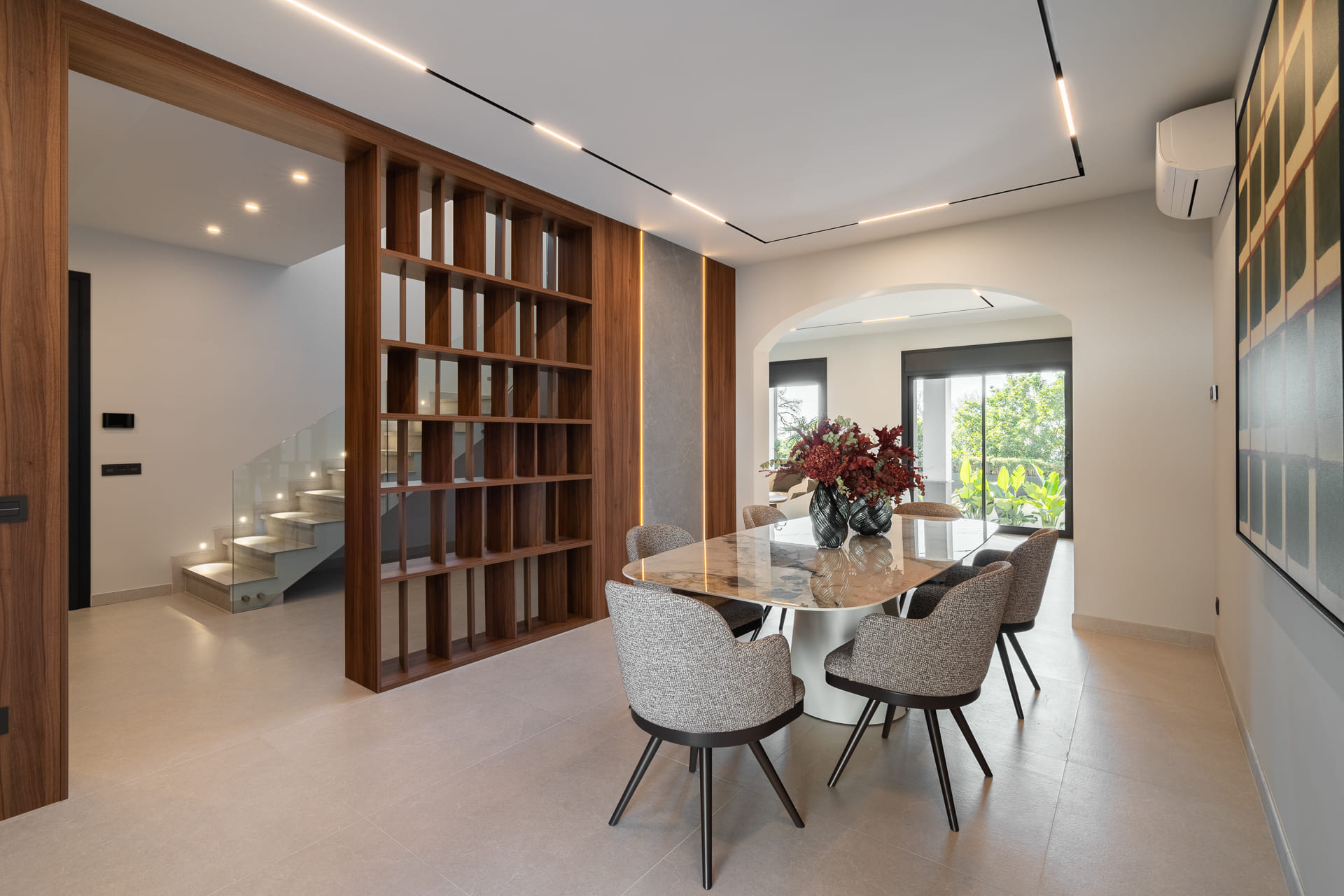
Light also influences how terraces are used. A well-oriented outdoor space can naturally extend the daytime living area, as demonstrated by this new-build penthouse with a terrace and private pool in Barcelona.
Good light is not merely light that impresses. It is light that accompanies everyday life without causing discomfort.
Privacy should be checked from different positions
An elevated terrace, a swimming pool or large windows can create a strong feeling of openness. However, openness and privacy do not always mean the same thing.
During the viewing, it is advisable to stand in different areas and observe what can be seen from neighbouring properties, the street or the communal spaces.
In apartments, the relationship with the buildings opposite can change considerably from one floor to another.
In houses, vegetation may partially shield the views, although it can also require continuous maintenance or become less dense during certain times of the year.
Interior privacy is equally important.
Are the bedrooms sufficiently separated from the social areas? Do guests need to pass through private spaces? Is the entrance well organised? Can different activities take place without exposing the entire home?
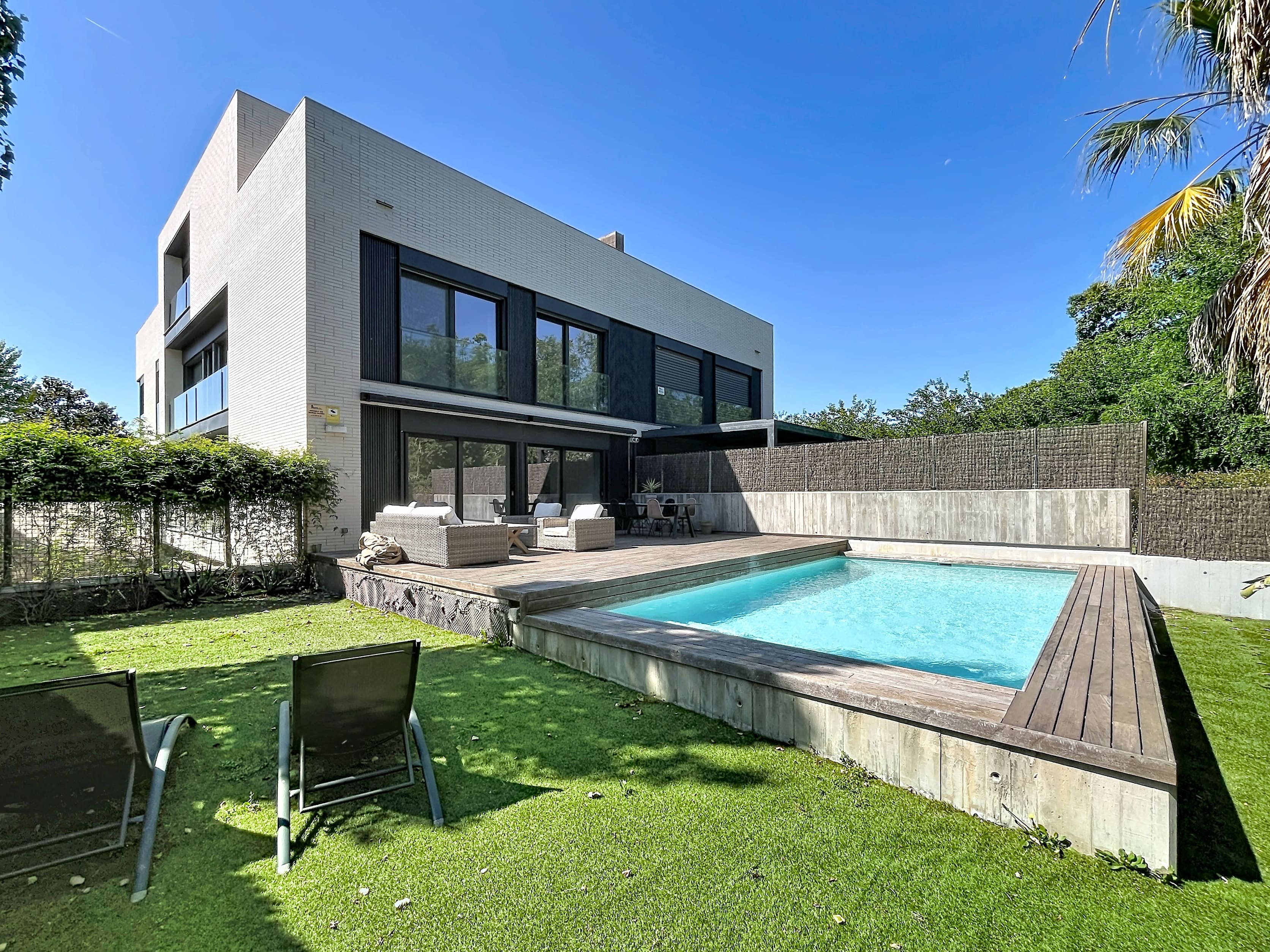
A property may be isolated and still fail to provide sufficient privacy. Another may be situated close to a city while offering excellent privacy through its architecture, orientation and layout, such as this contemporary design house with a garden and swimming pool.
Privacy does not depend solely on distance. It also depends on how the home has been conceived.
Square metres do not explain how a home functions
Two properties with a similar surface area can provide completely different experiences.
The difference lies in their proportions and in the way they are navigated.
An excessively long corridor, an entrance without a transition space, a kitchen located far from the dining room or a poorly connected principal suite can reduce the comfort of an apparently spacious home.
During the second viewing, it is worth imagining everyday situations:
- How would shopping or luggage be brought inside?
- Where would coats and everyday objects be left?
- How would a meal be served on the terrace?
- Could guests stay without disrupting the entire family routine?
- Is there a reasonable separation between rest, work and social activity?
It can also be useful to think about the buyer's existing furniture. The objective is not to force every item to fit exactly, but to interpret the true proportions correctly.
Photographs taken with wide-angle lenses can make rooms appear larger and make distances more difficult to judge. Walking around the property without rushing helps reveal how much free space will remain once the furniture is in place.
A good layout does not need to explain continually how it should be used. Its purpose becomes clear while moving through it.
An outdoor space should be genuinely usable
Terraces, gardens and swimming pools are among the most valued features when searching for a property near the Mediterranean.
However, their usefulness does not depend solely on their size.
It is important to observe whether shade is available during the middle of the day, whether the wind makes certain areas difficult to use, whether access from the kitchen is practical and whether the outdoor space has a natural relationship with the interior.
In a house with land, changes in level, irrigation, vegetation, walls, access points and the condition of auxiliary installations should also be assessed.
A large plot can provide privacy and scenery, but it also requires an appropriate maintenance structure. A more compact terrace may be exceptionally pleasant if it is well oriented, protected and connected to the principal rooms.
In properties such as this design property with a swimming pool and sea views in Sitges, a second viewing makes it possible to assess not only the impact of the landscape, but also the connection between the different floors, the garden, the pool and the areas used every day.
Everyday usefulness is often a more reliable measure than visual impact.
The building also forms part of the decision
When the property is located within a building, the private home represents only one part of the transaction.
The condition of the façade, roof, lifts, installations and communal areas can influence both future costs and the owners' peace of mind.
An excellent interior renovation does not remove the need to understand the building as a whole. It is important to determine whether any works are planned, special assessments have been approved, restrictions apply or particular circumstances may affect the property.
The condition of entrance halls, car parks, storage rooms and communal areas should also be reviewed. Their maintenance can provide useful information about how the building is generally managed.
In historic buildings, certain interventions may be restricted by protected architectural features. In newer constructions, it is advisable to assess how the communal services are managed and the cost of maintaining them.
The home ends at its front door from a private perspective, but not from a technical or financial one.
The cost of living in a property does not end with its purchase price
Some homes include systems, services and facilities that provide comfort, security and wellbeing. However, they also generate recurring costs and maintenance requirements.
Before purchasing, it is reasonable to understand the communal charges, estimated consumption and maintenance requirements of swimming pools, gardens, climate-control systems, private lifts, home automation, security systems or specialist installations.
The question is not whether these services are expensive or economical in abstract terms. The important issue is whether their cost is consistent with the use they will receive.
A facility that is enjoyed and simplifies daily life may be fully justified. Another that is rarely used may become an unnecessary obligation.
It is also useful to distinguish between the ordinary cost of maintaining the home and investments that may arise in the medium term, such as renewing installations, façades, roofs, windows or communal equipment.
Quality does not consist of accumulating features, but of ensuring that every feature contributes genuine value.
The zone should be explored as part of the viewing
A location may appear perfect on a map and provide a different experience when explored on foot or when everyday journeys are repeated.
It is worth checking the real distances to important places: work, schools, the airport, medical centres, shops, sports facilities or cultural venues.
It is also advisable to visit the surroundings at different times and, whenever possible, complete some of the journeys that would form part of the daily routine.
When searching for a property in Barcelona, a distance of only a few streets can significantly alter the natural light, noise, privacy or ease of access.
In zones such as Castelldefels, Gavà Mar, the Maresme or Sitges, the relationship with roads, railway stations and services can have a direct influence on everyday organisation.
On the Costa Brava or in Menorca, in addition to the distances involved, it is worth considering whether the property will be used throughout the year or primarily during specific periods.
Buyers are not simply purchasing an address. They are choosing a way of relating to their surroundings.
Comparing properties is not simply a matter of counting features
When several homes are viewed, it is easy to end up comparing bedrooms, square metres, terraces, swimming pools or parking spaces.
These details are useful, but they do not always make the decision easier.
It may be more revealing to consider what compromises each property requires.
One home may provide extraordinary views but require extensive renovation. Another may be completely finished but offer less privacy. A third may occupy an excellent location while its layout restricts certain ways of living.
A perfect property rarely exists in absolute terms. The decision involves identifying which aspects are essential and which can be accepted, altered or compensated for.
True judgement appears when the search moves away from the home with the greatest number of attributes and towards the one that requires the fewest important compromises.
What to check during a second viewing
Although every property requires a different assessment, a second viewing should allow the following aspects to be examined more carefully:
- Natural light: how it enters and is distributed throughout the different rooms.
- Noise: sounds originating outside, within the building and from the property's own installations.
- Privacy: exposure from the street, neighbouring properties or communal areas.
- Layout: internal routes, proportions and separation between the different areas.
- Access: the main entrance, car park, lift and everyday routes.
- Outdoor spaces: orientation, wind, shade, maintenance and connection with the interior.
- General condition: windows, floors, installations and possible signs of damp or wear.
- Building or plot: communal elements, façades, roofs, gardens and facilities.
- Surroundings: traffic, services, journeys and activity at different times of day.
- Costs: communal charges, consumption, maintenance and possible future works.
This review does not replace the technical and legal checks required before formalising a transaction, but it helps determine whether the property deserves to progress to that next stage.
Atipika's support during the viewing
At Atipika Lifestyle Properties, we understand that a viewing does not simply consist of opening a door and listing the features of a property.
Our role is to provide context, answer questions, make the available documentation accessible and help buyers interpret what they are seeing.
More than 25 years of supporting buyers, owners and investors have allowed us to understand the differences between zones, property types and ways of living that may appear equivalent on a property portal.
A well-planned second viewing should not attempt to accelerate the decision. It should help clarify it.
It should allow buyers to ask questions, confirm their impressions and understand both the strengths and the particular characteristics of the home.
Trust is built by providing the information required to make a confident decision.
The right property becomes clearer when viewed again
Some homes lose their appeal during a second viewing. Others become more compelling.
The quality of their proportions, tranquillity, layout, light or the ease with which everything appears to function gradually becomes more apparent.
What initially seemed understated begins to make sense. What created an immediate impact finds its proper place within a more complete assessment.
That second impression is usually calmer, but no less emotional.
Purchasing an important property requires information, documentation and analysis. It also requires time to listen to the space and confirm whether the life imagined during the first viewing can genuinely be sustained.
Atipika can accompany you throughout this process and help you look beyond the image to recognise the true value of each property.
You can contact the Atipika team to receive personalised advice, arrange a viewing and discover the properties that best suit your needs and way of life.
 Castellano
 Català
 English
 Francais
 Italiano
 русский